
Kaskade Fixed Water Dispenser
The secure water dispenser for public institutions
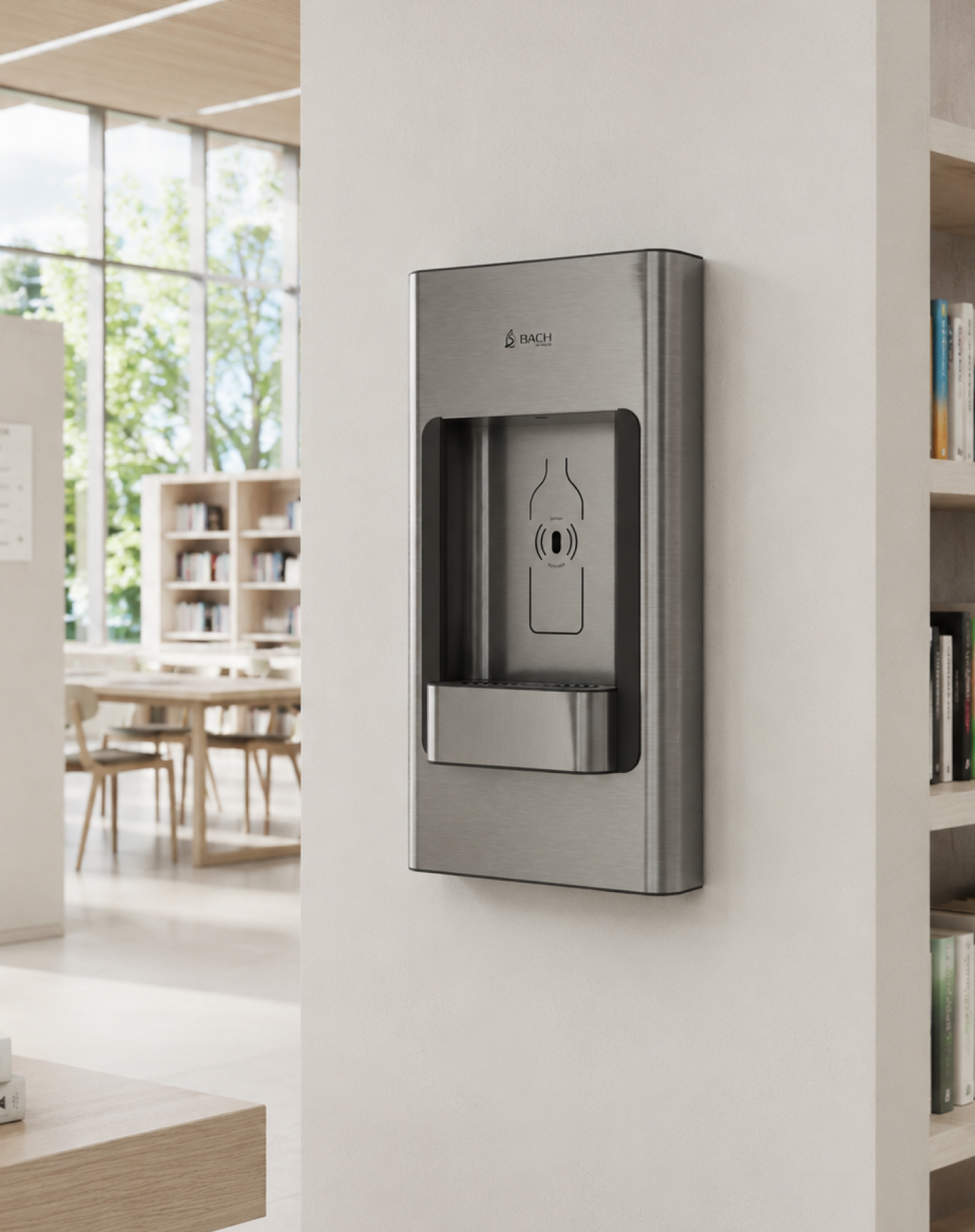
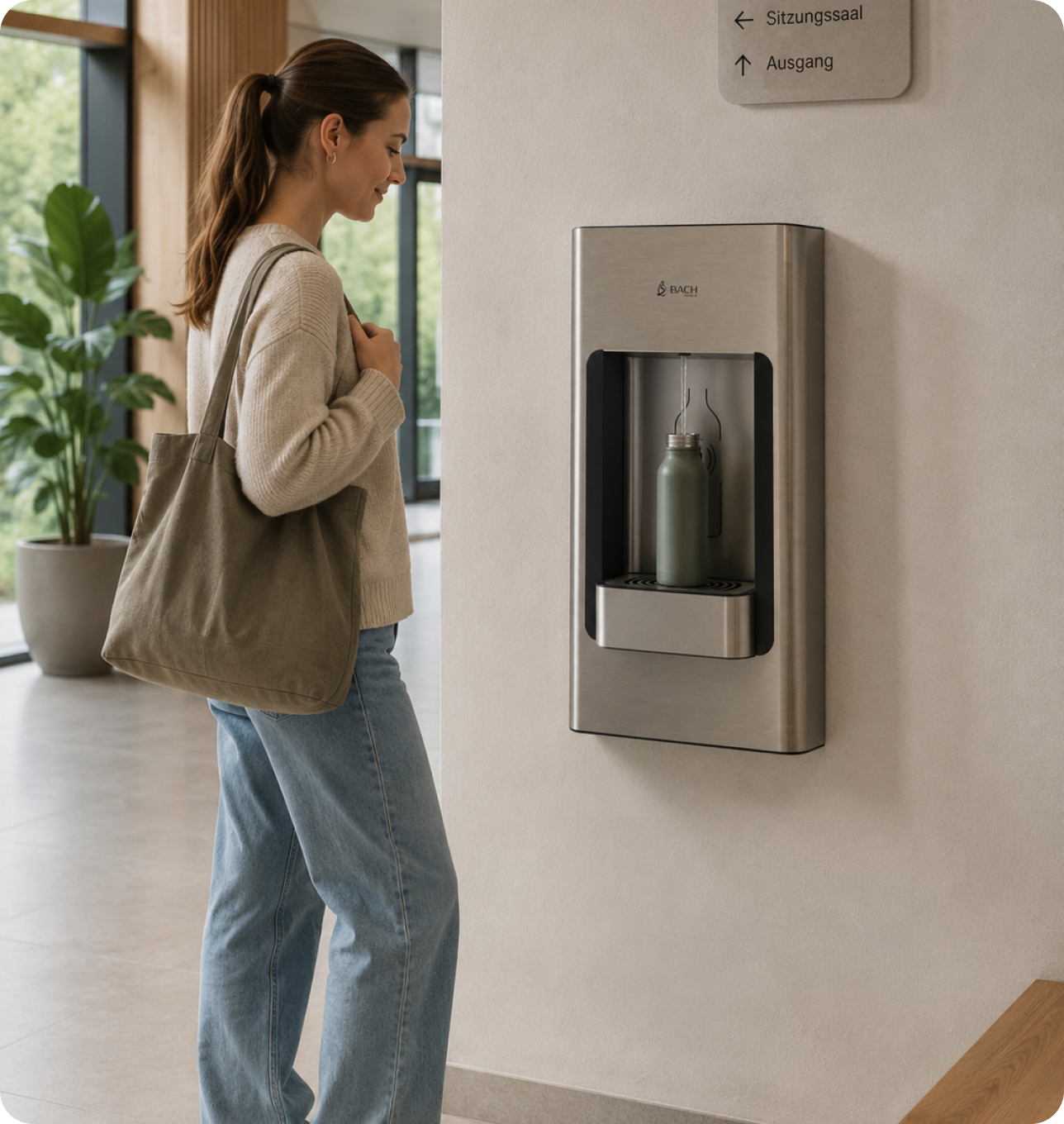
The Kaskade fixed water dispenser by myBach was developed for schools, administrative buildings, sports facilities, and high-traffic indoor areas — wherever operators require a reliable drinking water solution with high everyday usability, clear cost control, and maximum operational safety.
With contactless operation, automatic hygiene flushing, self-sufficient power supply (via water turbines), high-quality stainless steel construction, and optional hygiene monitoring, Kaskade is more than a classic indoor water dispenser: It is a well-engineered infrastructure solution for municipalities, educational institutions, and public operators.

Vandal-proof
Self-sufficient Power Supply
Real-time hygiene monitoring
Contactless
For public institutions
Why public institutions are now opting for plumbed-in water dispensers
Public drinking water supply is becoming increasingly relevant for cities, municipalities, and educational institutions. Heat prevention, sustainability, plastic avoidance, and the easy availability of drinking water are increasingly becoming integral components of modern municipal infrastructure. Furthermore, new laws mandate the installation of plumbed-in water dispensers.
Kaskade was developed precisely for this need: a compact, wall-mounted indoor water dispenser that can be quickly integrated, functions reliably, and gives operators the control they need in public environments.
Three compelling reasons for decision-makers
Safety and hygiene in self-sufficient operation
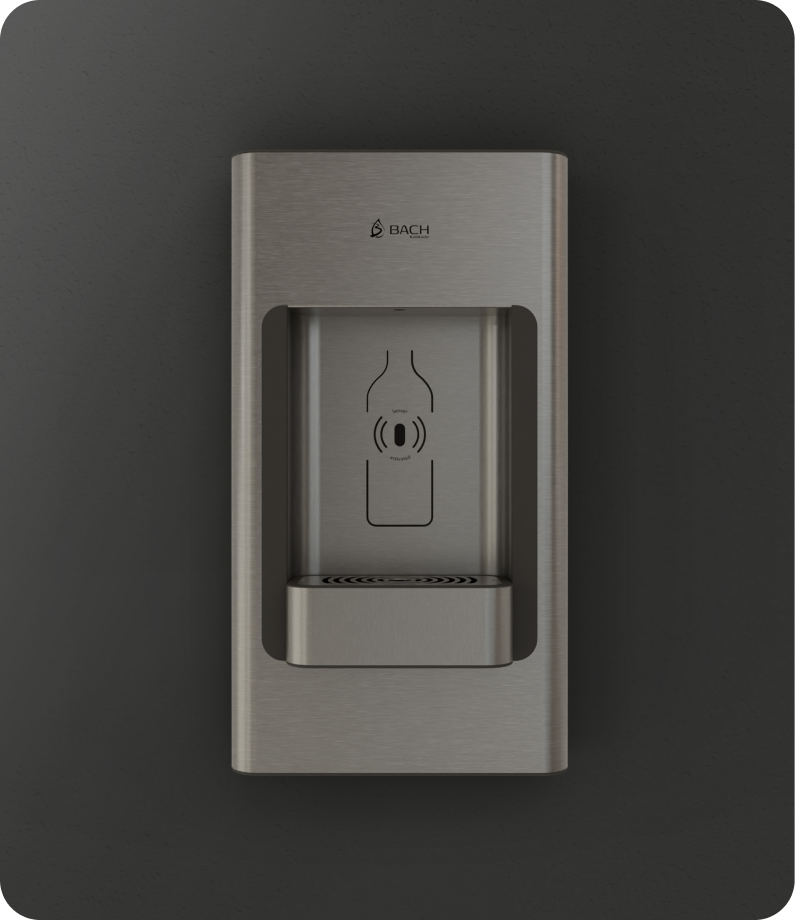
Kaskade is activated contact-free via a sensor. Users do not need to touch the water dispenser to draw water. This reduces touchpoints in daily life and is a crucial advantage, especially in schools, public buildings, and high-traffic indoor areas.
The automatic water stop after 20 seconds prevents unintentional continuous flow. Additionally, the system flushes automatically at regular intervals to reduce stagnant water and support hygienic operation.
Self-sufficient power supply means: no power connection, no battery changes, less maintenance – and at the same time, more hygienic pipes because water turbines regularly move water through the supply line.
In short: fewer touchpoints, less stagnant water, more operational reliability. A win-win-win.
Control through hygiene monitoring
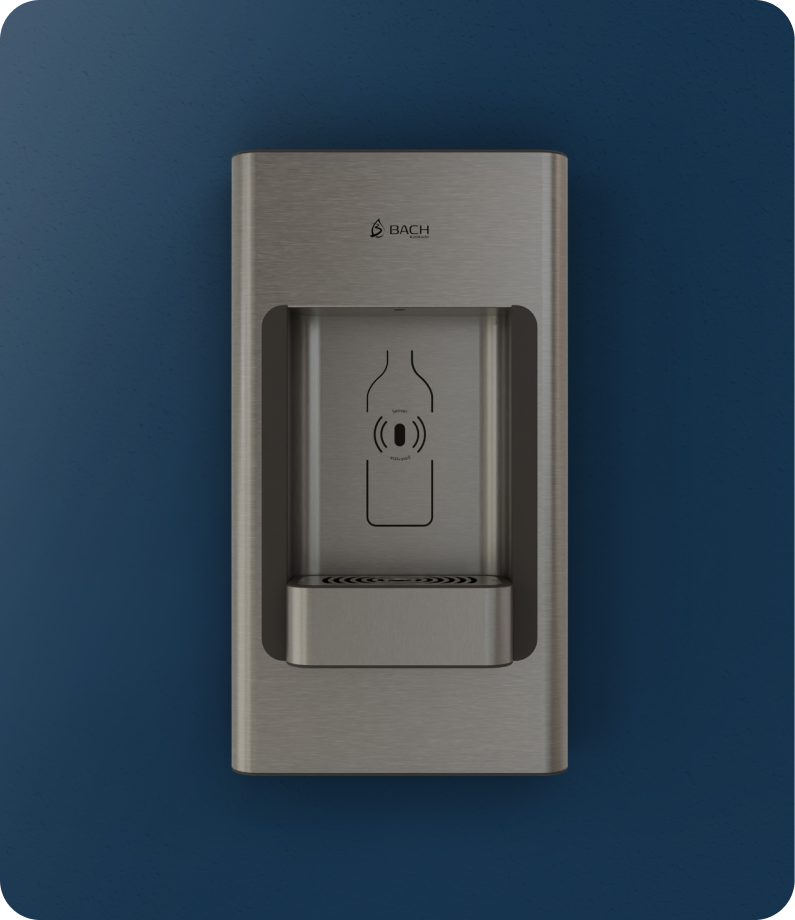
For operators, facility management, and health authorities, one thing is becoming increasingly important: hygiene must not just be asserted – it needs to be demonstrably documented.
Kaskade's hygiene monitoring makes hygiene-relevant operational data visible. Operators can view on their computer how the water dispenser is being used, the water temperature, and the measured flow rates. From this data, water consumption, usage, plastic bottles saved, and CO₂ emissions saved can be derived. In case of a malfunction, the system alerts you via email before anyone can surprise you with a complaint.
Particularly valuable for public operators: The data can be downloaded as a report and used for internal documentation, coordination with the health authority, or sustainability reporting.
Benefits for operators: more transparency, better documentation, less uncertainty, and a stronger basis for discussions with the health authorities.
Cost-effectiveness through robust design and easy maintenance
A water dispenser in a public area doesn't just have to look good. It has to work – every day, reliably, even with high usage.
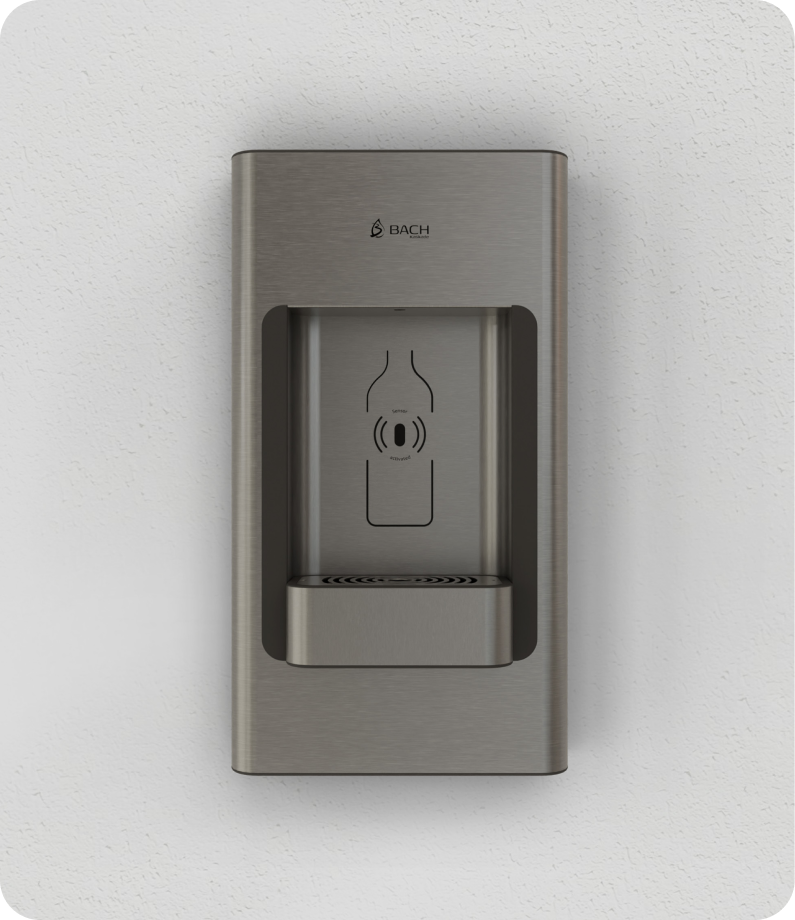
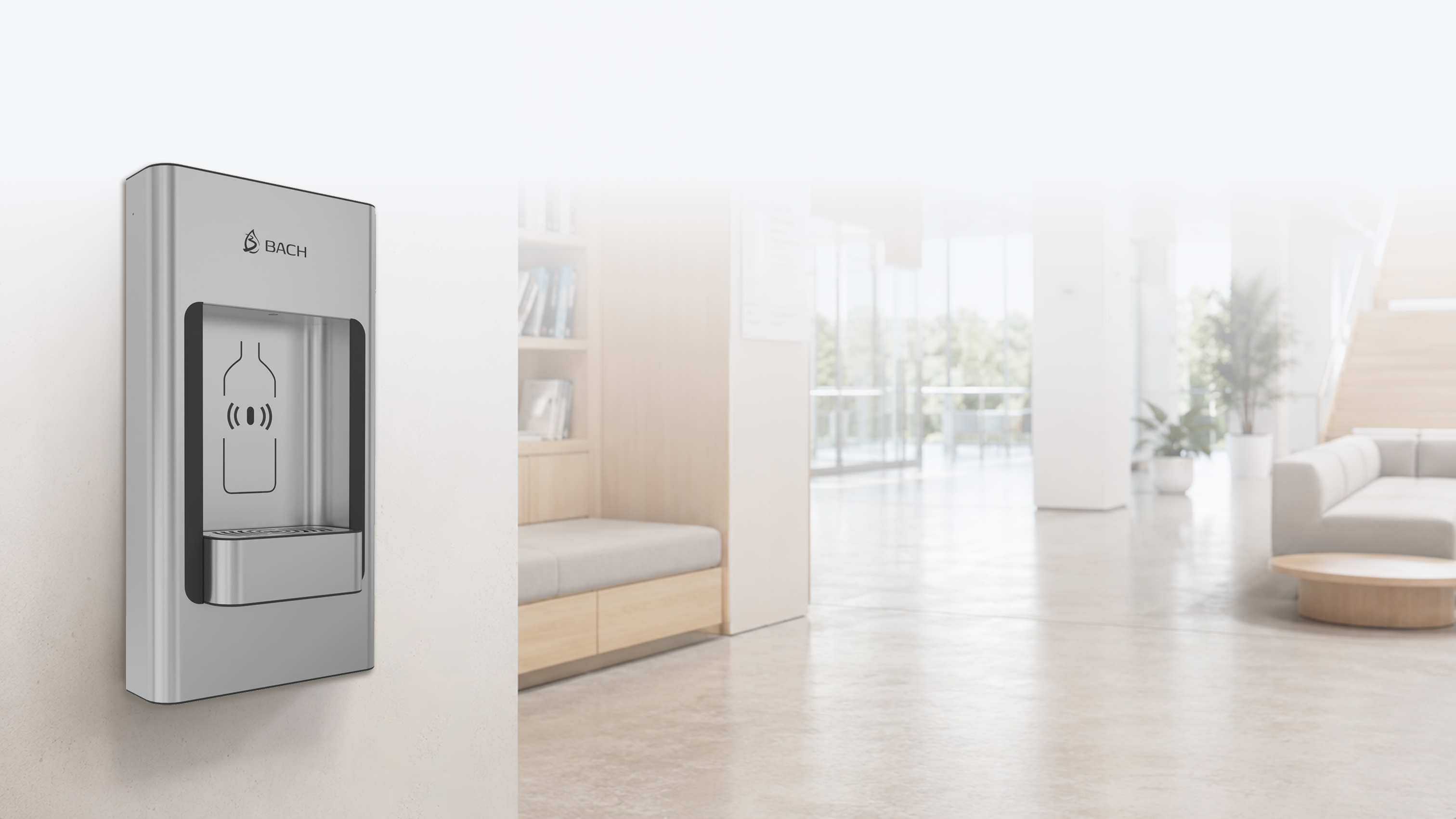
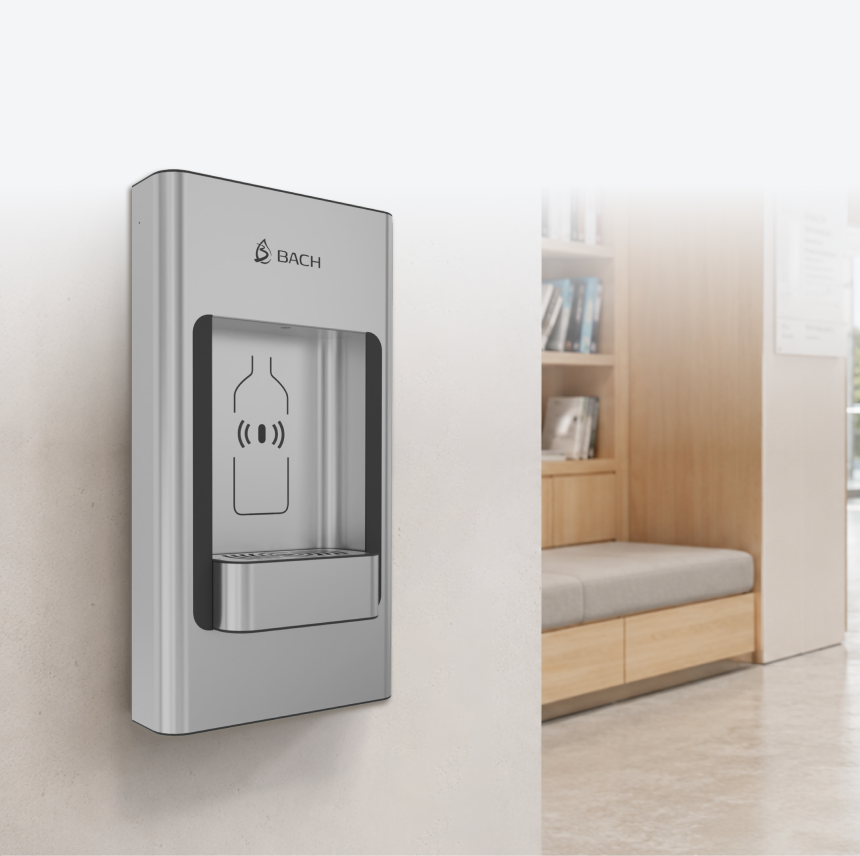
Kaskade is wall-mounted, compact, and robustly designed, so it doesn't obstruct escape routes. The housing is made of high-quality stainless steel and is removable for maintenance. The drain grille can be removed for cleaning. Power is supplied autonomously by water pressure or via annual batteries, eliminating the need for a 230V connection and significantly simplifying installation in existing buildings.
Thanks to production in Germany, public clients also benefit from short supply chains, quicker coordination, and prompt spare parts supply.
The indoor water dispenser - designed for municipal realities
Many plumbed-in water dispensers look convincing in brochures but incur unnecessary operating costs: complex maintenance or service contracts, long delivery times, difficult spare parts supply, lack of documentation, or insufficient transparency for operators.
This is where Kaskade comes in.
The plumbed-in water dispenser was developed for public and semi-public buildings where reliability, hygiene, and serviceability are crucial. Its compact surface-mounted design allows for seamless integration into hallways, entrance areas, schools, administrative buildings, or sports facilities.
Visible sustainability instead of abstract climate goals
Kaskade helps public institutions make sustainability tangibly visible. Every refilled bottle reduces the need for single-use plastic. Every liter of tap water saves 600 times the CO2 compared to a liter of bottled water. Each use can be translated into consumption and sustainability data via monitoring. This transforms a water dispenser into a measurable contribution to modern, sustainable infrastructure.
Water temperature and flow rate
Single-use plastic bottles saved
CO₂ savings
Usage by period
Water consumption per location
This data is ideal for sustainability reports, school projects, internal communications, citizen outreach, and the political presentation of municipal initiatives.
References that build trust
Kaskade is designed for public institutions and is already being implemented or planned for municipal projects and educational facilities.
Especially for public clients, it's important to note: The Kaskade drinking water dispenser is not an anonymous imported product, but a solution produced in Germany, offering direct technical consultation, traceable quality, and prompt service.

Customizable for cities, universities, and public buildings
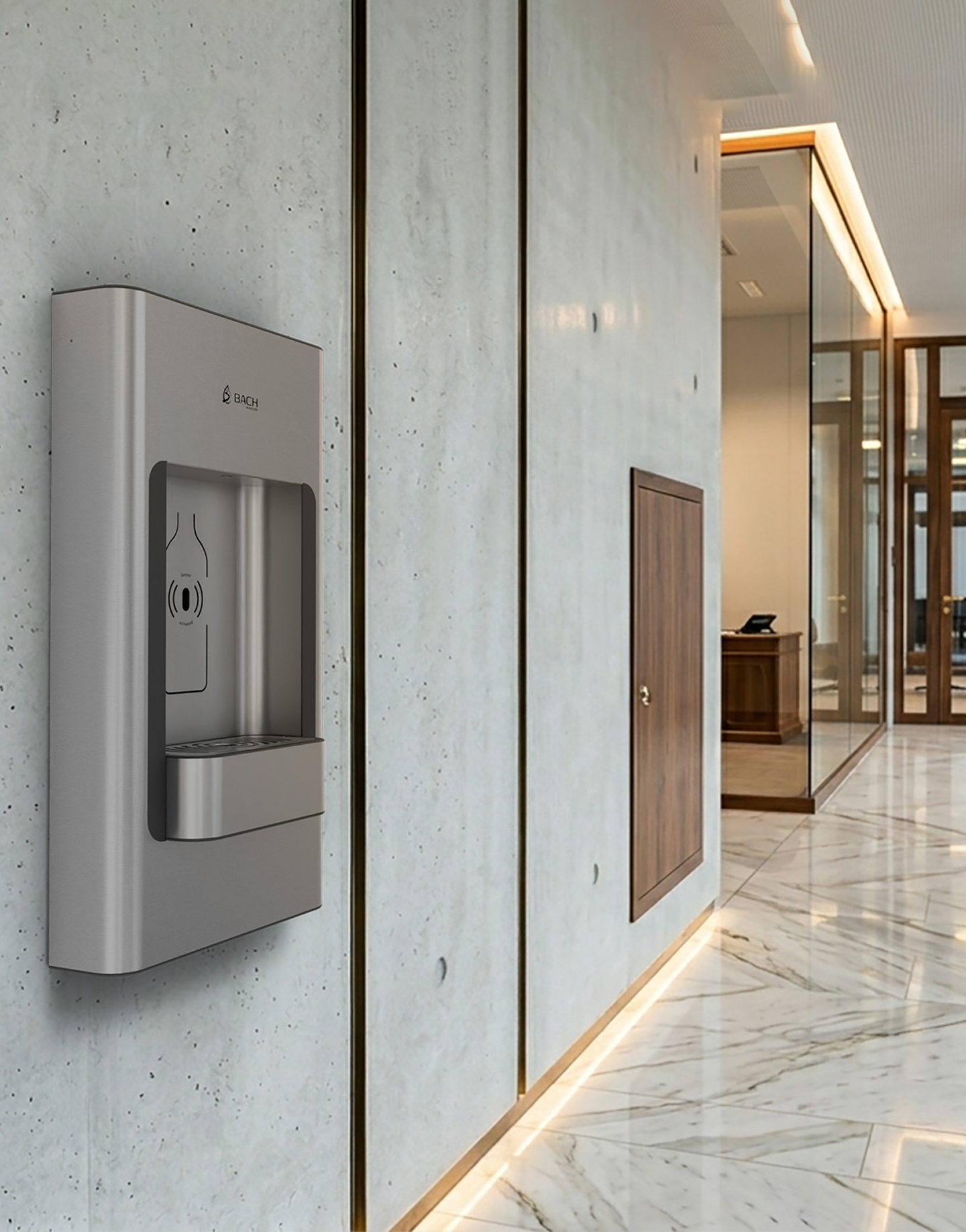
Public water dispensers are more than just functional objects; they are visible elements that define entrance areas, school hallways, foyers, sports facilities, and administrative buildings.
For this reason, Kaskade can be visually customized to match the location, corporate design, or municipal design specifications. Logos, color schemes, or project-specific inscriptions can be incorporated upon request.
Optional: Energy self-sufficient version with water turbine technology
In addition to the standard battery-operated version, Kaskade can optionally be planned as an energy self-sufficient model. This utilizes existing water pressure to generate electricity for technical functions via small water turbines.
This is particularly interesting for operators seeking a future-oriented solution without a traditional power connection.
Technical Key Data
Product: Kaskade Fixed Water Dispenser
Manufacturer: myBach, Stuttgart, Germany
Application area: Indoor
Mounting: Wall mounting / Surface mounting
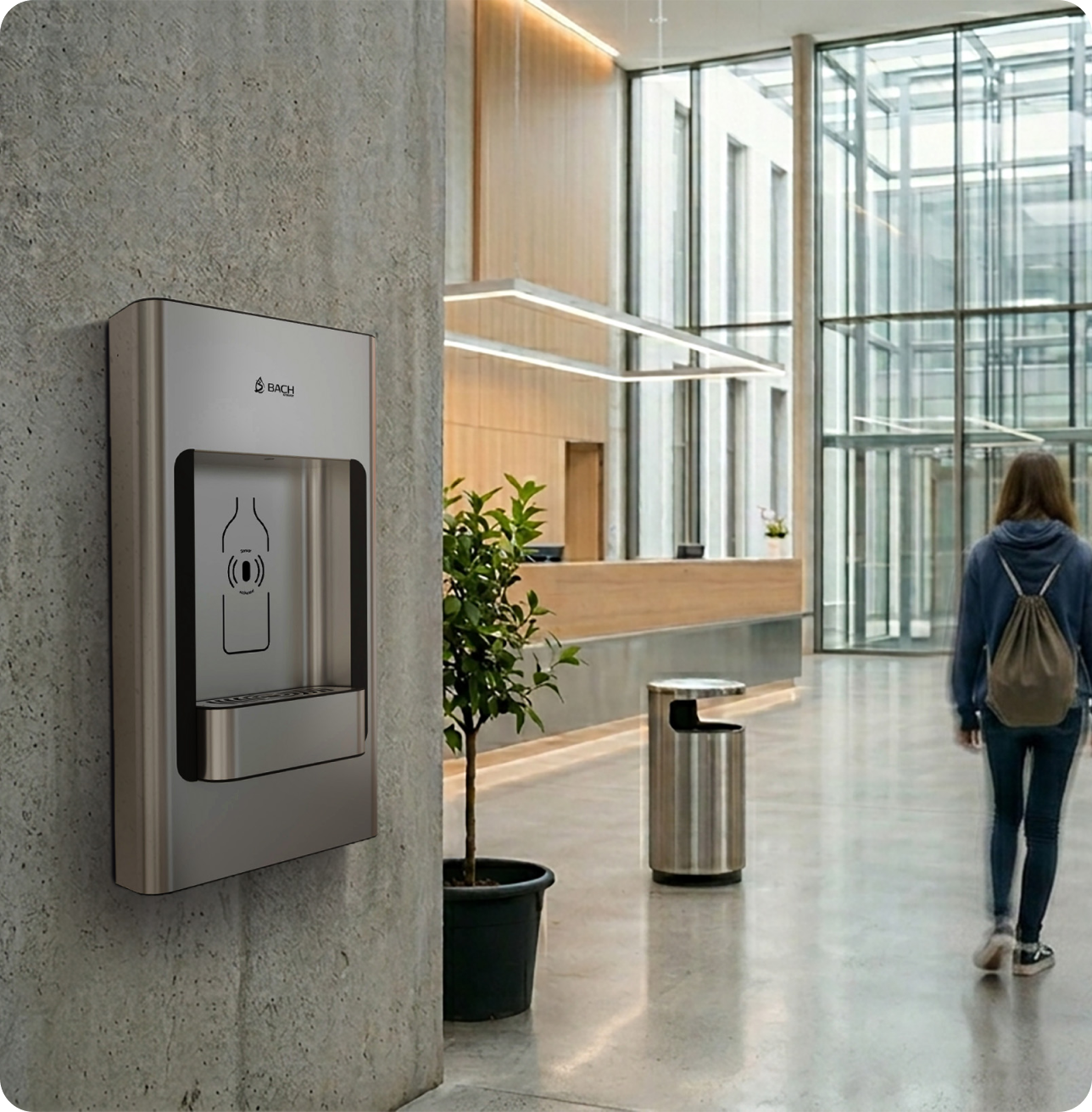
Material: V4A stainless steel with ABS inserts
Dimensions: 728 mm height × 400 mm width × 150 mm depth
Activation: contactless sensor
Water auto-stop: after 20 seconds
Hygiene flush: automatically every 60 minutes
Power supply: self-sufficient via water pressure or battery operation with annual batteries
Options: Hygiene monitoring, water filter, individual connection and design options, self-sufficient power supply via water turbines
3 steps to your finished fixed water dispenser
Clarify location and feasibility
We advise on whether the desired location is technically suitable: water connection, wastewater drainage, mounting height, wall condition, and desired features.
Define offer and equipment
You will receive a customized offer for your facility – including variants, options, monitoring, filters, and design possibilities.
Start installation and operation
After delivery, the water dispenser will be installed, connected, and commissioned by you or your installer / building maintenance team.
Frequently Asked Questions about the Kaskade Water Dispenser
Who is the Kaskade fixed water dispenser suitable for?
The Kaskade drinking water dispenser is suitable for schools, universities, town halls, public buildings, sports facilities, businesses, and all indoor areas where many people need a reliable supply of drinking water.
Does Kaskade require a power connection?
No. The standard version is powered by annual batteries. Therefore, a 230V power connection is not required. A self-sufficient version can be supplied optionally.
Is hygiene monitoring available?
Yes, Kaskade can optionally be extended with monitoring for water quality and hygiene data. This provides operators with greater transparency regarding temperature, flow, usage, and consumption.
Can Kaskade be customized?
Yes. For public clients, universities, and cities, individual design requests such as colors, logos, or labeling can be reviewed.
Is Kaskade suitable for schools?
Yes. The contactless operation, robust construction, easy maintenance, and automatic flushing make Kaskade particularly appealing for schools and educational institutions.
How quickly are spare parts available?
Production in Germany and short supply routes ensure a fast spare parts supply.
Secure the Discounted Public Sector Offer for Kaskade
Many cities, schools, and public institutions are currently expanding their drinking water infrastructure. Those who plan early benefit from better conditions, cleaner project planning, and faster implementation.
Request your customized quote for the Kaskade indoor water dispenser now and secure the current introductory price for public institutions.
Special Offer: For a limited time only, we are currently offering Kaskade at discounted project conditions.
We usually send you a customized quote for your project within 24 hours on weekdays.
Self-sufficient Version - More Flow, More Fresh Water, Better Hygiene
The optional self-sufficient version of the Kaskade uses existing water pressure to generate electricity for the water dispenser's operation via small water turbines. This allows the plumbed-in water dispenser to be planned with particular independence and eliminates the need for a traditional external power supply. This, in turn, reduces effort and costs.
An additional hygienic advantage arises from the higher water flow during operation: When larger quantities of water are regularly moved through the pipe to the water dispenser, the supply line is flushed more thoroughly. This can reduce stagnant water and support regular replacement with fresh drinking water.
Experience shows that fresh water is cooler than stagnant water. Since many hygiene-relevant microorganisms can multiply faster at higher temperatures, regular water exchange further supports hygienic operation. The self-sufficient version can thus create technical independence and help positively influence the water dispenser's hygiene status.
This point is particularly relevant for public institutions: The water dispenser reliably supplies users with drinking water and, through the regular movement of water, also ensures that the supply line to the device is actively flushed.
Advantage for operators: The self-sufficient Kaskade combines sustainable self-energy generation with a hygienically beneficial fresh water principle – ideal for public buildings, schools, universities, and municipal facilities with high demands on safety, control, and operational efficiency.
Customization

The optional lower panel is the elegant solution when water and wastewater connections come from the floor. It conceals visible pipes, protects the installation, and ensures a clean, high-quality overall appearance – without the need for a large freestanding unit.
This is particularly advantageous in hallways, schools, administrative buildings, and public areas. Many freestanding units are chosen simply because the pipes come from below. The Kaskade solves this problem more elegantly: With its shallow depth, it remains close to the wall, space-saving, and significantly less conspicuous in the room.
The solution is also compelling from a hygiene perspective. While dust, dirt, or moisture can often accumulate under freestanding units, the area around the wall-mounted Kaskade remains more accessible and cleaner. At the same time, the flat design reduces potential collision points and can facilitate planning in passages, hallways, and escape and rescue routes – depending on local regulations and the respective fire protection concept.
The panel can also be customized: painted, engraved, labeled, or branded with a logo. Upon request, technical components such as pressure reducers or water meters can also be neatly integrated. Thus, a technical necessity becomes a design detail.
Gibt’s den schon in meiner Region?
Sehen Sie, wo der Kaskade bereits im Einsatz ist. Klicken Sie auf einen Standort für Details.
Die moderne Trinkwasserlösung für kommunale Projekte
Sichere Trinkwasserversorgung für Kommunen, Schulen und öffentliche Gebäude — mit persönlicher Beratung und aktuellen Sonderkonditionen.